What We Aim For
To quantify and mitigate the impacts of changing marine lightscapes from coastal darkening to artificial light pollution through science, innovation, and policy collaboration.
Our Objectives
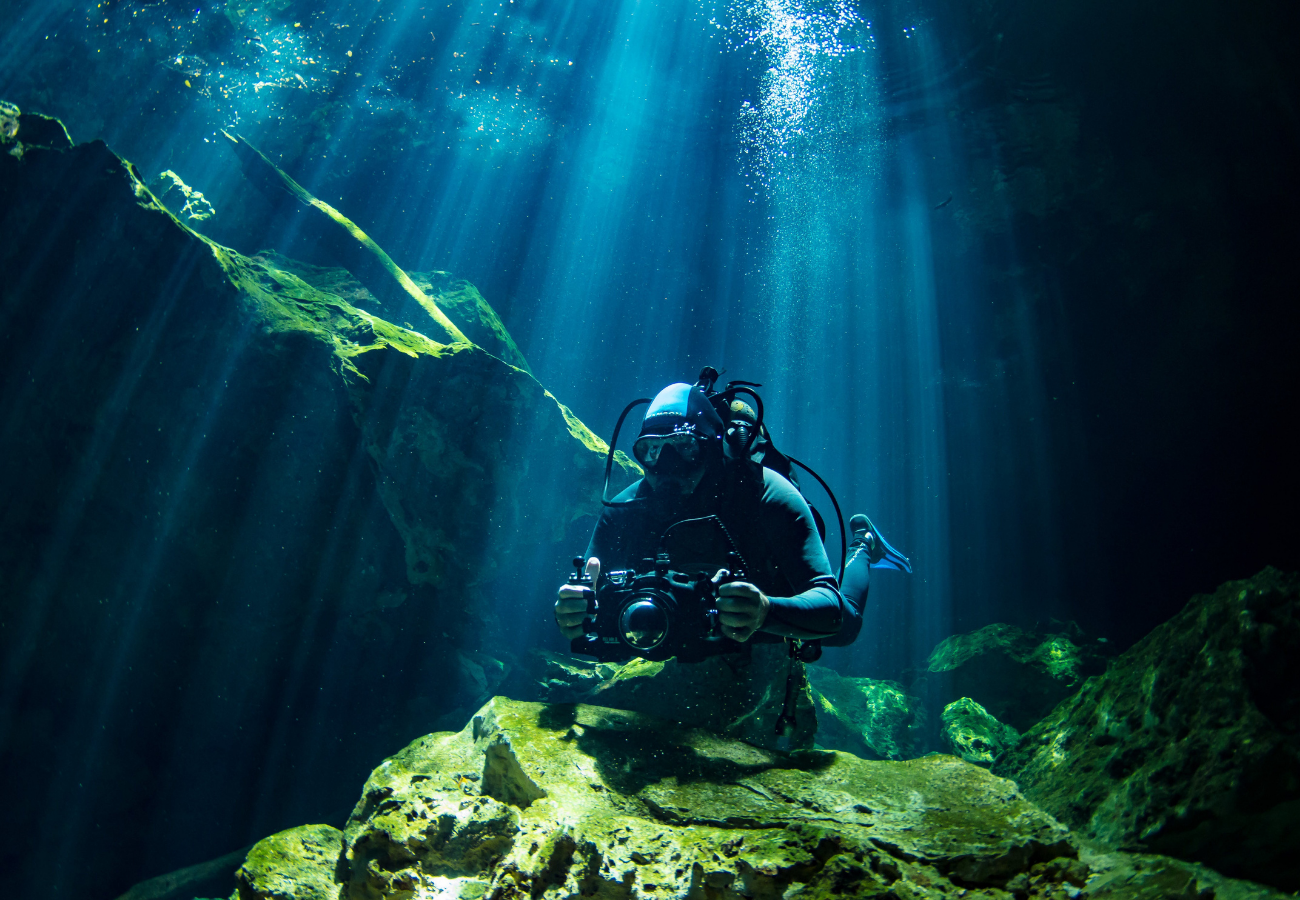
Mapping Marine Lightscapes
We uncover how natural and artificial light in our seas has shifted over decades, shaping ecosystems and biodiversity.
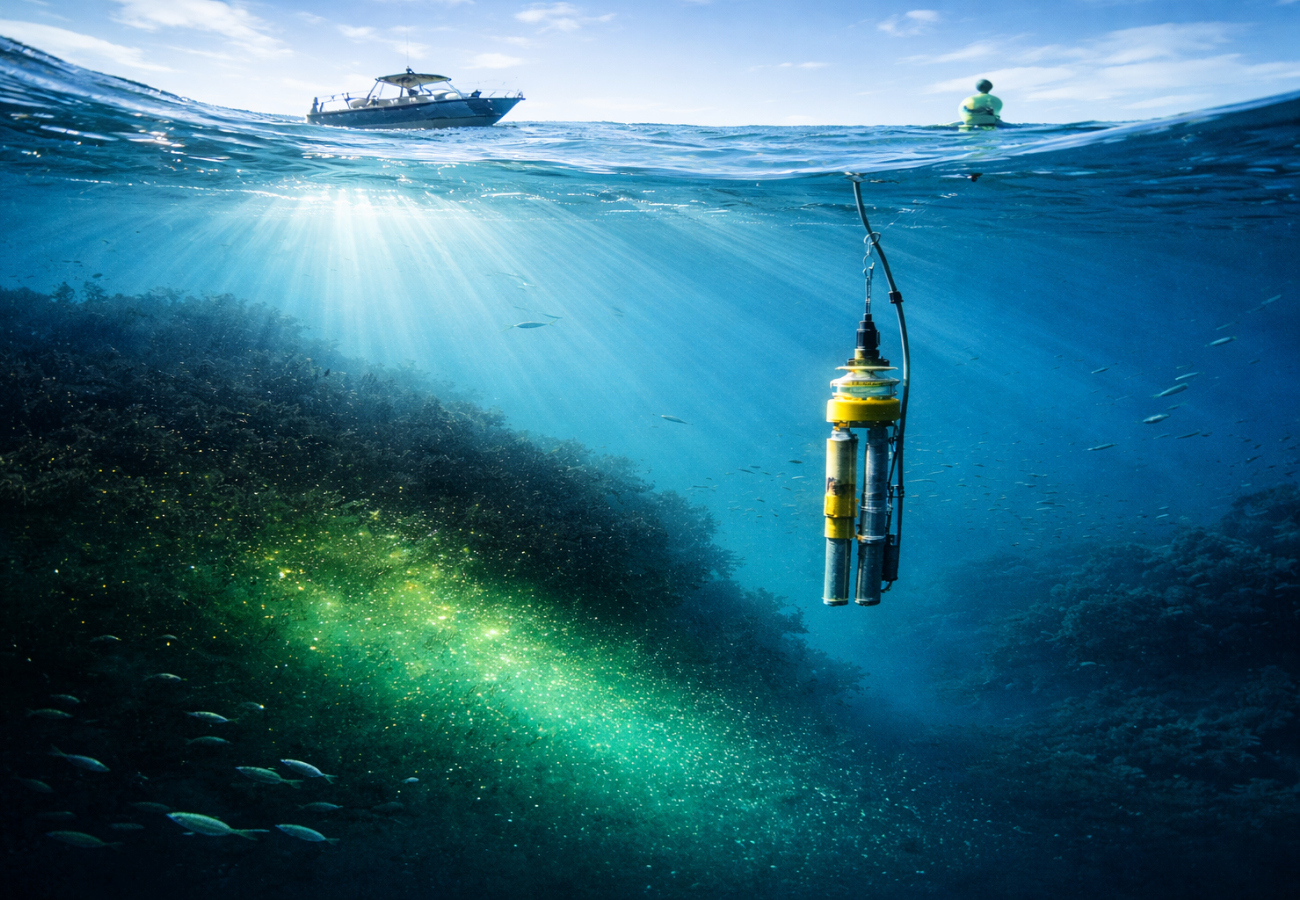
Connecting Science and Society
We link human activity, climate, and technology to changes in underwater light, creating knowledge for better management.
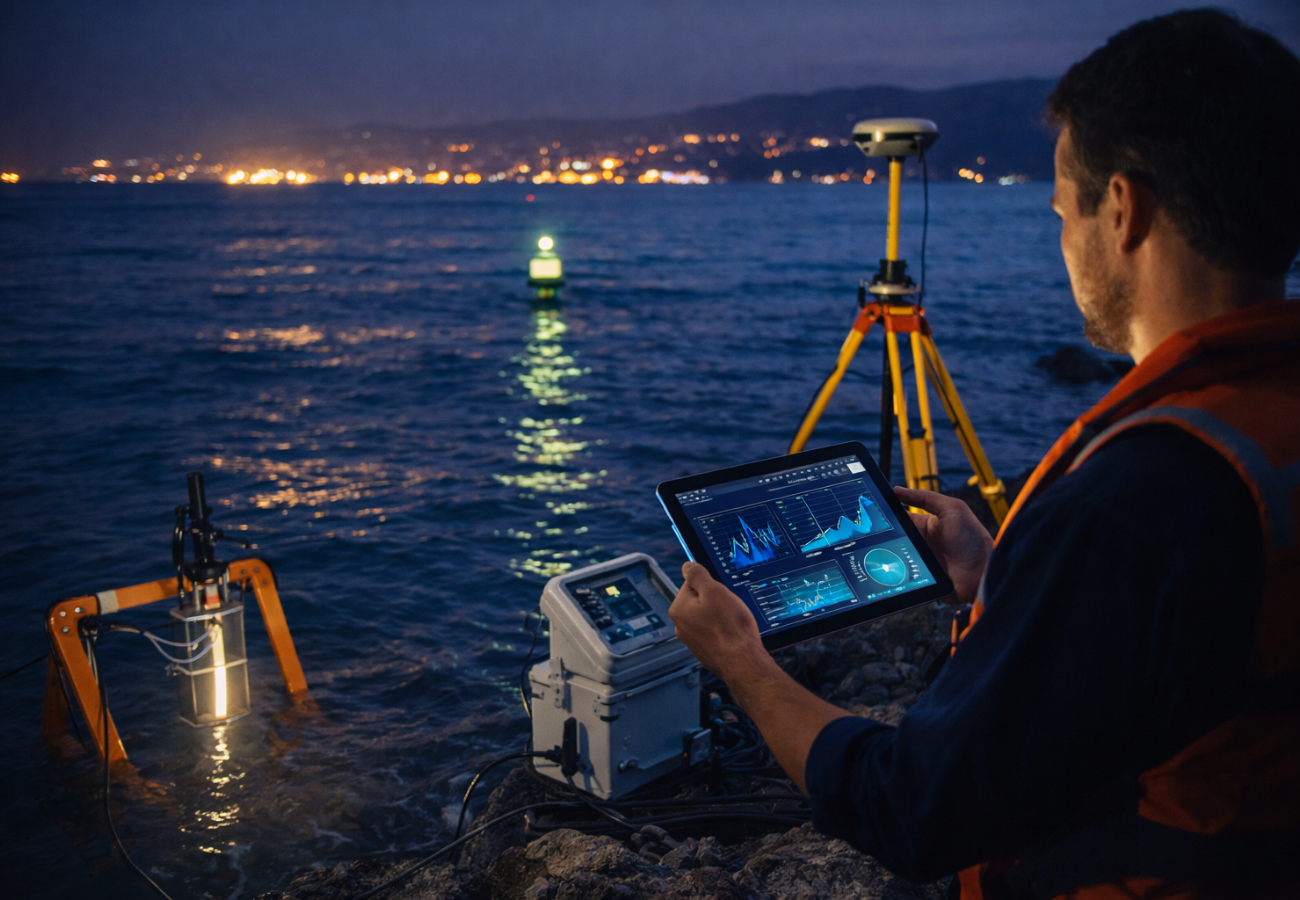
From Evidence to Action
We build monitoring tools and policy frameworks that help protect marine lightscapes and sustain ocean health.
The three Project Pillars of ISOLUME
Science & Discovery
Advancing our understanding of how marine lightscapes are changing.
Technology & Innovation
Developing monitoring tools, models, and assessment frameworks.
Policy & Action
Translating science into effective international marine management strategies.
Our Project
The overarching aim of the ISOLUME project is to quantify changes in marine lightscapes resulting from ALAN and Coastal Darkening – including their drivers and ecological impacts and develop novel monitoring and policy frameworks for mitigating them. To achieve this aim, ISOLUME is broken down into six closely interconnected work packages. Each scientific work package (WP2 – WP5) progresses from observing changes in marine lightscapes, to understanding their drivers and impacts, and finally translating scientific knowledge into mitigation strategies and policy-relevant outcomes.
Research Questions
ISOLUME investigates how underwater light environments have changed over recent decades, examining both the darkening of coastal waters and the rapid expansion of artificial light at night. By combining long-term observations with satellite data and modelling efforts, the project reveals where, how fast, and why marine lightscapes are changing.
The project explores the natural and human-driven processes behind changing light conditions, from land-based runoff and climate variability to coastal development and lighting technologies. ISOLUME links activities on land, along coasts, and at sea to changes in how light propagates in marine environments.
ISOLUME examines how artificial light from cities, ports, vessels, and offshore infrastructures enters the ocean after dark. Special attention is given to the transition from older lighting technologies to LEDs, and how this shift has altered the intensity, colour, and depth of nighttime light underwater.
The project assesses how altered light conditions affect marine life, including primary production, habitat quality, biological timing (phenology), and visual ecology. ISOLUME connects changes in light to impacts on key species, ecosystems, and services that healthy oceans provide.
ISOLUME develops and tests new monitoring approaches that combine satellite observations, in-water measurements, and modelling tools. These innovations aim to make changes in marine lightscapes measurable, comparable, and suitable for long-term observation.
A central question for ISOLUME is how scientific evidence can support better management. The project translates research findings into assessment frameworks, mitigation options, and policy-relevant indicators, helping decision-makers address light-related pressures on marine ecosystems.
Work Programme Overview
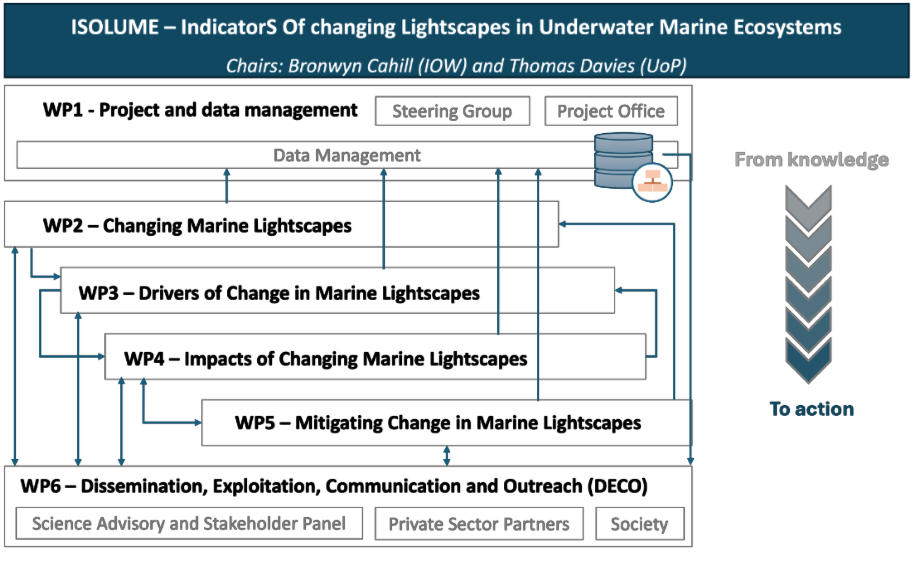
Work Packages
The ISOLUME work packages are closely interconnected, progressing from observing changes in marine lightscapes, to understanding their drivers and impacts, and finally translating scientific knowledge into mitigation strategies and policy-relevant outcomes.
WP1 – Project and Financial Management
WP1 ensures the effective coordination, data management and stakeholder engagement for the ISOLUME project
WP2 – Changing Marine Lightscapes
WP2 quantifies long-term changes in marine lightscapes across European seas, driven by coastal darkening and artificial light at night, using combined satellite and in situ observations.
WP3 – Drivers of Change in Marine Lightscapes
WP3 identifies and models the key environmental, climatic, and human drivers shaping underwater lightscapes from river catchments to coastal and offshore waters.
WP4 – Impacts of Change in Marine Lightscapes
WP4 assesses how changing marine lightscapes affect primary production, habitat quality, phenology, and visual ecology of marine organisms.
WP5 – Mitigating Change in Marine Lightscapes
WP5 develops monitoring tools, mitigation strategies, and policy frameworks to reduce negative impacts of coastal darkening and marine light pollution.
WP6 – Dissemination, Exploitation, Communication and Outreach
WP6 maximises the societal and policy impact of ISOLUME by communicating results, engaging stakeholders, and supporting knowledge uptake beyond the project.